Send your message to us:
Write your message here and send it to us

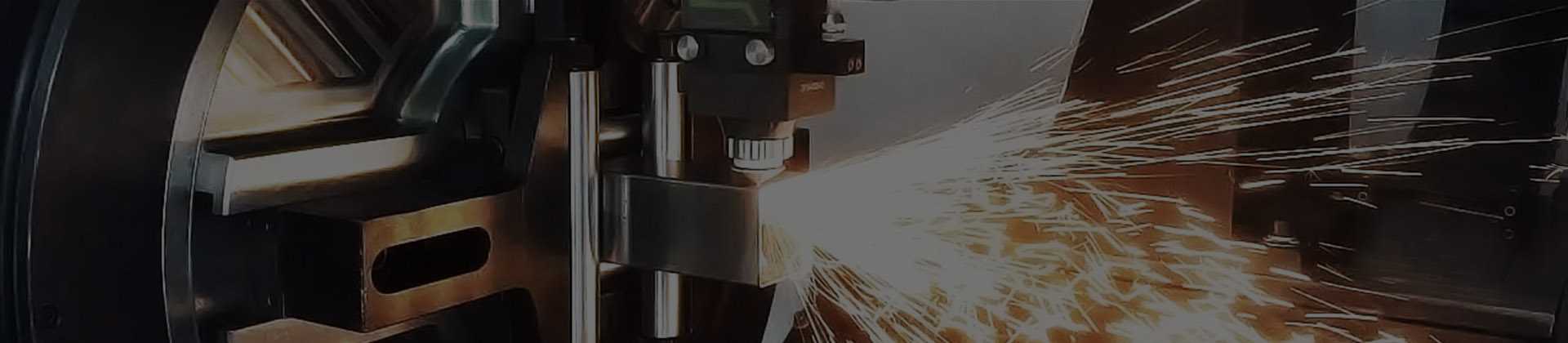
Actually, a tube laser cutting machine not only saves your money but also improves your production efficiency and the possibility of getting more high-quality metal furniture orders from the market and your competitors. So, stop losing money on manual tube cutting. If you're producing metal furniture frames, switching to tube laser cutting can reduce labor costs by up to 50% and improve material utilization by 10–20% at least.
In the current global industrial landscape, the metal furniture manufacturing sector—including office desks, chairs, and home frames—is undergoing a critical transition from labor-intensive manual production to high-precision automation. The core driver of this transformation is fiber laser cutting technology, specifically specialized tube systems. Today we analyzes the industry's two-tier investment strategy: entry-level standard machines priced at approximately 350,000 RMB and high-end systems like the i20A Intelligent Series. By comparing market benchmarks, production costs, material utilization, and payback periods, this report provides a detailed empirical analysis for industry decision-makers.
Metal furniture manufacturing (round, square, oval, and D-shaped tubes) traditionally relies on a fragmented chain: band saw cutting, punch press hole making, drill press expansion, and intensive manual deburring. This method leads to cumulative tolerances and high labor costs.
In contrast, fiber laser tube cutting consolidates these steps into a single automated setup. Controlled by CNC systems, the laser head handles cutting, punching, and slotting while the tube rotates, ensuring tolerances as tight as ±0.05mm to ±0.03mm.
| Metric | Traditional Mechanical Methods | Fiber Tube Laser Cutting |
|---|---|---|
| Number of Processes | 4-5 Disconnected Steps | 1 Integrated Step |
| Positioning Accuracy | ± 0.5mm to ± 1.0mm | ± 0.03mm to ± 0.05mm |
| Production Speed (5,000 parts) | ≈ 21 hours | ≈ 7 hours |
| Setup & Changeover | Several hours (tool changes) | Minutes (digital loading) |
Equipment selection in the furniture industry is now a balance of processing precision, automation, and Industry 4.0 digitalization.
This tier serves as the benchmark for small to medium-sized workshops replacing manual saws. It is ideal for standard thin-walled tubes (<6mm carbon steel) and basic components, typically featuring a dual-chuck design with manual or semi-automatic loading.
Targeted at luxury brands, high-volume exporters, or "Smart Factories," systems like the i20A are the new industrial standard. It offers diameter versatility (240mm or 350mm chuck options) and full support for MES/ERP systems, enabling real-time data transmission and seamless docking with automated material warehouses.
| Investment Tier | Est. Amount (RMB) | Diameter Options | Precision & Dynamics |
|---|---|---|---|
| Entry-Level Standard | ≈ 350,000 | 120mm - 160mm | Basic CNC, 1.0G Accel. |
| Intelligent (i20A) | 1,000,000+ | 240mm / 350mm | MES Support, 1.2G Accel. |
The core profit driver for furniture ROI is Air-Assist Cutting. For typical 1.5mm - 2.5mm tubes, using a high-pressure air compressor slashes gas costs by over 90% compared to nitrogen. One automated laser system can replace 2–3 manual workstations, saving an estimated 190,000 to 240,000 RMB annually in direct wages.
In furniture manufacturing, raw materials account for 40%–50% of total costs. Tailing management is a primary driver of high-end ROI:
| Annual Financial Variable | Entry-Level (350k RMB) | Intelligent i20A (1M RMB) |
|---|---|---|
| Labor Savings | ¥ 160,000 (2 workers) | ¥ 240,000 (inc. MES efficiency) |
| Material Savings | ¥ 25,000 (Standard) | ¥ 145,000 (Zero Tailing) |
| Added Production Profit | ¥ 100,000 | ¥ 350,000 (24/7 Automation) |
| Annual Operating Costs | (¥ 45,000) | (¥ 100,000) |
| Net Annual Gain | ¥ 240,000 | ¥ 635,000 |
| Payback Period | ≈ 17.5 Months | ≈ 18.9 Months |
The ROI of tube laser cutting in the metal furniture industry is about systemically eliminating material waste and secondary processing costs. While the 350,000 RMB machine is ideal for small shops to solve immediate labor shortages, the i20A Intelligent Series is a core asset for high-end exporters. Despite the higher CAPEX, its ability to achieve True Zero Tailing and MES connectivity creates a much higher long-term marginal profit.
Laser cutting is a good investment if:
- You produce furniture frames in batches
- Labor cost is rising
- You have delivery pressure
Want a Golden Laser expert to help you calculate a custom ROI based on your factory?
Send us your production data